
Cup of Coffee: February 5, 2026
Framber Valdez is a Tiger, Mickey Lolich passes, Springfield, Ohio prepares for war, what we talk about when we talk about which president appointed a judge, and the death of the Washington Post
Good morning! And welcome to Free Thursday!
The best remaining pitcher on the market signed, a Hall of Very Good pitcher has ascended to Valhalla, and the Washington Post has been beat to Hell.
The Daily Briefing
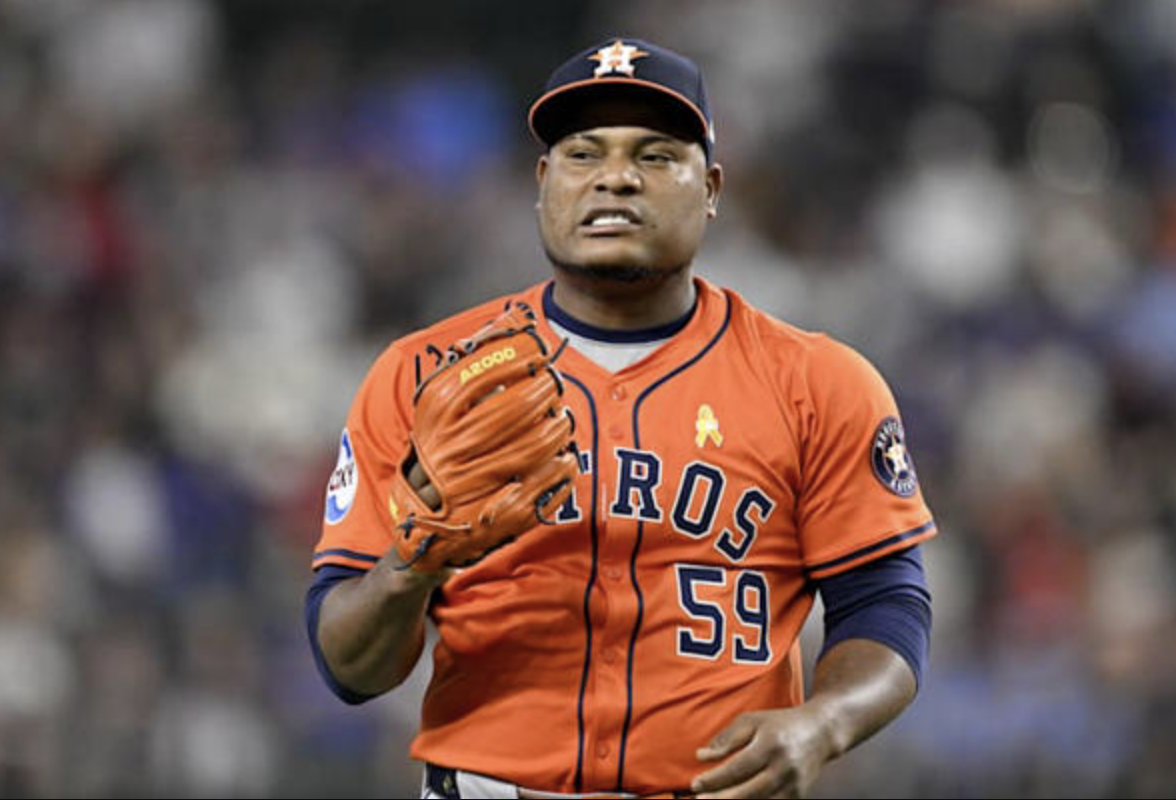
Tigers sign Framber Valdez
Here's something no one was expecting: the Detroit Tigers have signed Framber Valdez to a three-year, $115 million deal. Part of that comes in the form of a $20 million signing bonus. There is an opt out after 2027. There is also talk of deferred money, but I've not seen the details on that.
The timing of this deal is particularly interesting given that the Tigers and Tarik Skubal had their arbitration hearing yesterday, the results of which are expected to be announced later this morning. If Skubal wins they'll pay him $32 million. If the team wins, he'll make $19 million. Do the Tigers have inside word as to how that'll play out? Did they sign Valdez because they know they can afford him due to a lower Skubal salary? Or do they plan to simply trade Skubal either because he wins and his salary is too rich for their blood or because, hey, now is the time to get something for him before he walks next winter?
Or, hell, maybe the Tigers just figured now was the time to load up for bear and try to win a championship before Skubal leaves. If so, they're looking pretty good in that regard, with Skubal at the top of the rotation followed by Valdez, Reese Olson, Jack Flaherty and Casey Mize and some combination of Drew Anderson and Troy Melton to pick up the slack. That would certainly be what the fans want, but the other possibilities are certainly on the table.
Whatever this means for Tarik Skubal, Framber Valdez brings solid production to Detroit. He had a bit of a down year by his standards in 2025. And he had a pretty notable incident when he intentionally crossed-up his catcher in a game last September which made a lot of people question his character. But he still made 31 starts, pitched 192 innings, and won 13 games while posting strikeout and walk numbers that were not wildly off his career norms. A few more hits fell in and his ERA took a tick up, but nothing suggests he's in decline mode. As for the cross-up incident, he'll be coming to play for his old manager, A.J. Hinch, so one has to assume that Hinch has vouched for Valdez's attitude or, at the very least, believes he can get the best out of him. Whatever the case, he'd be a number one on a lot of teams and is a solid number two on a contender like the Tigers.
Still, all of this feels unsettled. It feels like there's still another big shoe to drop with this club and its undisputed number one. And it feels like this deal is all tied up in that.
Also . . .
- The Padres agreed to a deal with corner third baseman/left fielder Miguel Andujar. It’s a one-year, $4 million. Andujar hit .318/.352/.470 (125 OPS+) in 94 games while splitting time between the Athletics and the Reds; and
- The Boston Red Sox signed infielder Isiah Kiner-Falefa on a one-year $6 million deal. Kiner-Falefa's bat has basically fallen off a cliff, but he can still handle short and is a plus glove at second, so he'll either be a glove-first second baseman or a utility guy for the Sox.
David Peralta retires
Eleven-year MLB veteran outfielder David Peralta announced his retirement yesterday.
Peralta played nine of those seasons for the Arizona Diamondbacks followed by brief stops with the Rays, Dodgers, and finally the Padres. For his career he was a .278/.335/.448 (108 OPS+) hitter with 125 homers. He was a Silver Slugger in 2018 and won a Gold Glove in 2019. He led the NL in triples in 2015 and 2021. He played in the postseason in four separate years.
All of that was something one never would've guessed would happen given how weirdly his career started. Peralta was a pitcher, actually, signed out of Venezuela by the Cardinals. But his control was horrible and then he suffered serious shoulder injuries and he never rose above Low-A ball before St. Louis released him. He then spent three years in the indy leagues where he converted himself into a hitter before the Diamondbacks signed him as an outfielder in 2013. He made the bigs in the middle of the 2014 season, hit the ground running by tearing the cover off the ball right after being called up, and never looked back.
What an unusual career. But a pretty darn good one. Happy trails David Peralta.
Mickey Lolich: 1940-2026
Mickey Lolich, the hero and MVP of the 1968 World Series and the winner of 217 big league games over 16 seasons for the Tigers, Mets, and Padres, has died at the age of 85. No cause of death was reported, but he had been in hospice care for a short time prior to his death.
Lolich was one of those guys who sometimes falls between the historical cracks because, for however good he was, he was not a Hall of Famer and for whatever reason those sorts of guys tend to fall out of the baseball public’s consciousness. But he always was a hero to Tigers fans by virtue of his winning three games and hitting a home run in Detroit's comeback win in the 1968 World Series. His third win, in Game Seven, came on just two-days' rest against Bob Gibson, who had posted a mind-boggling 1.12 ERA that season. Standing alone it was one of the greatest performances in World Series history, but it was such a big deal at the time because it was Denny McLain, the Tigers' 31-game winner that year, who was supposed to be the hero, not Lolich.
For his career Lolich posted a record of 217-191 and a 3.44 ERA (104 ERA+) with 2,832 strikeouts in 3,638.1 innings. That strikeout total currently ranks him 23rd on the all-time list. He won 25 games in 1971 while logging a league-leading 376 innings in 45 starts with a whopping 29 complete games, while striking out a Tigers record 308 batters. Lolich would finish second in the Cy Young Award voting to Vida Blue that year and would finish third in the voting in 1972 when he won 22 games in 41 starts with 23 complete games. He'd start 83 games, completing 44 of them, over the next two years. We talked about the insane pitcher usage of the 1970s when Wilbur Wood died a couple of weeks ago. Lolich was right behind Wood in the workhorse rankings in those days, and he did it without being a knuckleball pitcher.
All of that work began to catch up to Lolich by the mid-1970s and the Tigers, in desperate need of a rebuild, dealt him to the Mets in exchange for Rusty Staub prior to the 1976 campaign. Detroit came out ahead on that deal, as Lolich went 8-13 with a 3.22 ERA in New York, temporarily retiring at the end of the season. After sitting out 1977 he would un-retire to sign with the Padres in 1978 but after two seasons as an occasionally effective reliever in San Diego he hung 'em up for good following the 1979 season.
Lolich was a three-time All-Star and had that 1968 World Series MVP Award to his credit. He managed to stay on the Hall of Fame ballot for 15 seasons after he retired, getting as much as 25.5% of the vote one year, but his candidacy faltered as the better pitchers of the 1960s and 70s began to retire and push him down voters’ ballots.
After he retired Lolich ran a couple of donut shops in the Detroit suburbs. Once, when I was a kid, my dad took my brother and me to his Lake Orion shop. Lolich wasn’t there – he was a hands-on shop owner, but he was at home that day – but the manager on duty called him and told him there were a couple of kids there who wanted to meet him. Lolich drove in on his day off and happily signed autographs for us while regaling us with war stories – some appropriate for an 11 and 13 year-old, some not, some repeatable, some not – from his time with the Tigers. He was super fun to be around for the hour or so we talked with him and he seemed like a hell of a nice man.

Rest in peace Mickey Lolich.
Other Stuff
Springfield, Ohio is preparing for war
Springfield, Ohio is a little less than an hour's drive west of downtown Columbus. It's a town of around 60,000 people, a quarter of whom are Haitian immigrants.
Why are there so many Haitians in what was, until very recently, a decaying post-industrial town like Springfield? Because Springfield wanted them there. Indeed, when waves of refugees began fleeing Haiti roughly 15 years ago, Springfield launched a campaign called "Welcome Springfield" in order to convince Haitians to move there to help bolster the city's crumbling population and to buoy its struggling economy. And it worked. New businesses opened in the town and new industries moved there to take advantage of a new willing and able workforce. Springfield's decades-long population losses ended. Because of that, Springfield became one of the few success stories for towns of its size and with its history.
Not that there haven't been some growing pains. After years of population decline the schools' increasing enrollment has created staffing challenges and the need for Haitian-Creole interpreters. And no matter how idealistic we want to be about America being a melting pot, there will always be some degree of tension when people with a different culture – and a different skin color – settle in what had been a largely white area. It's the sort of stuff that gets better over time due to the forging of social connections and broader assimilation, but the Haitian influx to Springfield is still pretty recent so Springfield is still in the shaking-out phase of all of all of this.
In August of 2023 an 11 year-old boy from Springfield named Aiden Clark was killed when a car crashed into his school bus. The crash was ruled an accident. The driver, who was Haitian, was unlicensed but, like virtually all of the many Haitians who have settled in Springfield over the past few years, he had legal immigration status. He was arrested, tried, and convicted of involuntary manslaughter. Which is exactly how the system is supposed to work. Despite that, an anti-Haitian backlash formed. Springfield is not a big city, however, and the backlash was Springfield-sized. It's the sort of thing that, in all likelihood, would've blown over with some time. J.D. Vance and Donald Trump would not allow Springfield to heal, however.
During the 2024 campaign Vance picked up on the Aiden Clark story and began using Springfield as an example of why, in his twisted, fascist view of America, immigration is destructive. There was little pushback against Vance among the national media because he's from just down the road and people assumed he knew what he was talking about. Before long, however, both he and Donald Trump began holding rallies during which they spread the vile, racist lie that Aiden’s death was a “murder” committed by “an illegal” as part of a “border blood bath.” They said that Springfield had been “invaded,” “conquered” and “taken over” by “migrant criminals from the dungeons of the Third World.” The conservative press amplified this blood libel, after which the backlash against the Haitian community exploded on a national level and hate groups began descending on Springfield.
Aiden's parents, Nathan and Danielle Clark, refused to become part of that backlash. Despite experiencing an unthinkable loss and feeling an unknowable grief, they spoke up in defense of the Haitian community and practically begged people — from Donald Trump on down — to stop using their dead son as a pretext for racist demonization. No one listened to them. The whole affair culminated in Trump's disgustingly racist "they're eating the dogs/they're eating the cats" rant during a presidential debate. When Trump was elected, the people of Springfield began preparing for the worst. They were right to do so.
Recently the DHS Secretary Kristi Noem ordered the revocation of Haitians' temporary protected immigration status, which allows them – some 350,000 of them nationwide – to legally live and work in the United States due to the turmoil in the country of their birth. That was supposed to take effect this past Tuesday, at which point everyone anticipated that the Regime would flood Springfield with its shock troops who would then embark on a brutal ethnic cleansing campaign like it has done in Minnesota. Earlier this week a federal judge issued a temporary stay of that order, however, preventing Noem from implementing her decision. The reason: Noem's comments about Haitians and her reasoning for the revocation of protected status consisted almost exclusively of vile, slanderous racist invective, rendering it illegitimate. DHS will appeal, however, and no one has much faith that the corrupt, Trump-controlled U.S. Supreme Court will stand in the way of the atrocities Trump, Vance, Stephen Miller, Tom Homan, and Noem are eager to unleash on Springfield.
Yesterday Michelle Goldberg of the New York Times wrote a column about the state of play in Springfield, correctly noting that, rather than "immigration enforcement," what's been happening there and what's about to happen there is the targeting of a specific ethnic group, for nakedly racist reasons, following a cruel propaganda campaign. She talks about the groups scrambling to organize in the face of the coming ICE invasion, led by church groups, some members of which would not, in the normal course, find themselves opposing the acts of a Republican administration:
Here, that resistance isn’t organized by neighborhood, as in Minneapolis, but through a network of Black, white and Hispanic churches. They call themselves the G92 Coalition, after the ancient Hebrew word “ger,” for stranger or foreigner, that appears 92 times in the Hebrew Bible. One of the founders is Carl Ruby, pastor of the nondenominational Central Christian Church. He’s a former Republican — he remains a fan of Ohio’s Republican governor, Mike DeWine — who describes himself as theologically conservative but social-justice oriented.
Central Christian has been training people to protest and document ICE raids. At first, its training sessions would bring out about 30 people. The most recent one, a week and a half ago, drew 200. In the lobby was a bucket of orange whistles of the kind that have become ubiquitous in Minneapolis, packaged with instructions on how to use them: short blasts to warn of ICE sightings, long continuous ones if someone is being detained.
“The pastors’ group that I’m in, we got together, and we agreed that if violence breaks out in Springfield, we have a duty to go right to the front of it and to call for peace,” said Ruby. One year into the second Trump presidency, it’s not just blue America where people are readying themselves for disaster.
Springfield, only being a fraction of the size of the Twin Cities, will inevitably organize its resistance to Trump's Gestapo in different ways than Minnesota did. To date, this is what I could find as far as groups and resources who are doing the organizing:
- The Ohio Immigrant Alliance has a number of resources specifically aimed at helping Haitians in Springfield;
- G92 Springfield, the leading “boots-on-the-ground” volunteer community organization that was mentioned in that New York Times article, is accepting donations. If you would like to get involved in volunteering, you can send an email to them at advocacy@ohiog92.org. The Reddit thread where I found their information says, "they are quick to respond, and can route you to the right chat."
- The Haitian Support Center has created an emergency fund to help families affected by the end of protected status;
- Springfield United Way Unity is accepting donations targeted to critical social services for Springfield’s Haitian families; and
- The Society of St. Vincent de Paul, a 501(c)3 nonprofit organization focused on caring for the poor, has a Springfield-dedicated assistance fund
The folks behind these efforts have strongly suggested that people who wish to donate to the cause in Springfield focus on financial aid over material goods, as locals are better able to attend to material needs than outsiders are. Also: if you're not from the area and you do find yourself in chats, forums, and other virtual gatherings related to Springfield, please try to do more listening than talking as there is always a risk of too much noise, as it were, that can interfere with operations. The people of Springfield need outside help, not outside leadership.
I hope that Springfield is spared the sort of attack on the populace that we saw take place in Minnesota. I do not, however, have much confidence that they will be.
Another datapoint in the crumbling of the Constitutional Order
Yesterday I wrote about Julie Le, the Minnesota attorney representing Homeland Security, who basically lost it in open court on Tuesday, saying she was so overwhelmed with cases that she wanted to be held in contempt so she could get some sleep. There were a couple of followup stories to that yesterday, further elaborating on that hearing and what it all means.
This NBC News story features Le's comments in open court about how DHS personnel, who are her client, simply ignore her when she communicates court orders to them such as "a prisoner has been ordered to be released from custody." She said it takes up to ten emails from her to get the government to listen to her. The Trump Regime. has, quite obviously, simply decided that it is not subject to the law and that it can ignore court orders unless and until a judge literally threatens to throw one of its officials in prison.
That story also talks about Le's co-counsel, Ana Voss, who unlike Le is a full-time Assistant U.S. Attorney and who was likewise summoned to the show-cause hearing. It turns out that Voss is one of many AUSAs who have submitted their resignation. The full-timers are every bit as exhausted and exasperated at the lawlessness of the federal government as the part-timers, and they want no part of this business.
This story, from Minnesota Public Radio, likewise digs deeper into the hearing and what has led to Le and Voss basically breaking with their own clients in open court. But it also contains a passage about the judge presiding over this case, U.S. District Judge Jerry Blackwell, that sort of crystalized something with which I've been troubled for some time:
President Joe Biden appointed Blackwell to the bench in 2022 after he served as a special prosecutor in the state murder trial of Derek Chauvin, the former Minneapolis police officer convicted of killing George Floyd.
Blackwell’s admonition follows a similar excoriation of DHS and Immigration and Customs Enforcement from U.S. District Judge Patrick Schiltz, a George W. Bush appointee who served as a clerk to the late conservative U.S. Supreme Court Justice Antonin Scalia in the 1980s.
News stories didn't used to, as a matter of course, identify the president who appointed a given federal judge. Maybe in cases where the judge's career or biography was being discussed, but not in simple stories about the goings on in their courtrooms. Now, however, you see it all the time. "Judge So-and-So, a Clinton appointee, ruled yesterday . . ." or "Judge WhatsHisFace, appointed by Donald Trump in 2018, said from the bench . . . "
That practice, I believe, is 100% a function of the politicization of the judiciary by Republicans over the past couple of decades. Judges have always had their biases, of course, but until relatively recently a federal judge was simply a federal judge for all intents and purposes. Now, however, news editors view the appointing president to be more explanatory of judges' rulings than the law is. Which is understandable given just how cravenly political so many GOP-appointed judges have become.
This is especially noticeable when a Republican-appointed judge rules against the Trump Regime for some reason. Note above how Judge Schlitz, the judge who ordered ICE Director Todd Lyons to appear before him last week, is described. Why does it matter that he was a Bush appointee or that he clerked for Scalia? It matters because, in the minds of many, it is extremely unexpected for a Republican judge to hold Trump's people accountable for anything. It's the ultimate man-bites dog story, which requires those details so people understand just how notable and newsworthy it is.
Judges are, in theory anyway, appointed to uphold law, not carry out the policy preferences of the president who appointed them. But because so many have ignored that and have subordinated the law to their political ideology, wide swaths of the public just assume, as a matter of course, that the judicial system and the law itself is inherently political in not just its formulation but also in its application. Because of this, the judge's political history is now considered essential to understanding what's happening.
Just another datapoint in the ongoing crumbling of America's Constitutional Order.
Bloodbath at the Washington Post
Yesterday, in a staff-wide call with employees, the Washington Post's leadership team announced sweeping staff cuts. From Columbia Journalism Review:
“Every department across the newsroom will be impacted to some degree,” Murray said, in a recording of the call shared with CJR. The sports department and books section will be closed; Post Reports, a politics podcast, will be suspended. The paper’s international footprint will shrink . . . The metro team will be restructured. The number of editors at the Post will be “significantly reduced”; art teams will be merged. “These moves are painful,” Murray said. “This is a tough day.”
There are a lot of individual job cuts, of course, but I was most taken by the fact that reporter Caroline O’Donovan, who has covered Amazon for the Post, is also being laid off. When Jeff Bezos bought the paper he and others talked big about how there would be complete separation between the Post and Bezos' other businesses, so I suppose it's just a grand coincidence that the owner of Amazon chose to fire someone whose beat it was to report on Amazon's activities.
Also covering the Post in glory is the fact that the paper's Ukraine correspondent, Lizzie Johnson, was laid off while she sat in the middle of a below-freezing war zone without power, heat, or running water.
Why such big cuts? From CJR:
Sources across the newsroom point to Bezos’s eleventh-hour decision to pull the editorial board’s endorsement of Kamala Harris as a turning point. In the days that followed, more than 250,000 readers canceled their Post subscriptions. “The sentiment is that the Post’s existing financial problems were drastically deepened by his yanking of the Harris endorsement and his remolding of the opinion pages, which led to a subscriber exodus,” the staffer said.
Of course that's relative. Bezos is currently worth an estimated $250 billion. When he bought the Post in 2013 – sale price, $250 million – he was worth approximately $25 billion. The last reported annual loss for the Post was $100 million. Peter Baker of the New York Times did some math and figured out that Bezos' income is such that he could absorb five years of those kinds of losses with what he makes in a single week. Which is to say, the paper could operate more or less indefinitely on the interest generated by just a fraction of Bezos' wealth parked in a savings account alone. Orson Welles covered this territory pretty comprehensively over 80 years ago, of course. Not that anyone will ever accuse Jeff Bezos of having Orson Welles' degree of insight into, well, anything.
But it's never about money for someone like Bezos. It's about power. He bought the Post thinking that the key to power in Washington, which he desperately desired, was via media influence. Then, after the first Trump term and all manner of pushback against the Post and Amazon that occasioned, Bezos figured out that the best way to get along with Donald Trump was to bribe him and otherwise kiss his ass.
That's why, in 2024, he pulled the endorsement of Kamala Harris. That why, that same year, he hired Will Lewis, a Rupert Murdoch minion, to be his publisher, after which Lewis turned the paper harder to the right than it had already been turned. That's why he gave Trump money directly in the form of donations for his inaugural ball, not a penny of which, I suspect, actually went toward the ball. That's why he spent some $75 million to produce a vanity documentary about Melania Trump. Who needs a functioning newspaper to influence the government when you can just buy influence?
That realization on Bezos' part has now resulted in the destruction of what was once one of the best newspapers on the planet and hundreds of journalists losing their jobs which, in today's media environment, means that most of them will just leave the field altogether in favor of becoming P.R. people or by taking other jobs outside of journalism. And, of course, the more degraded journalism becomes the more democracy becomes imperiled. A lot of people have made fun of the "Democracy Dies in Darkness" slogan the Post has used for the past six years, but it's 100% the case that sunshine is the best disinfectant and that Jeff Bezos is a walking solar eclipse. For him, democracy dying in darkness was the business plan, not a warning or a rallying cry.
To Hell with Jeff Bezos and everyone like him. Damn him and the other billionaires who play with the world like it's a toy on a string. Damn them for not caring a single bit about the people and the institutions they destroy with their toxic egos and their insatiable lust for power and control.
You couldn't print the things I'd like to see happen to them in a newspaper. Not that there are any newspapers anymore.
Have a great day everyone.
Comments ()